


Most of us gave up on bedtime routines somewhere around age ten. Then adult life arrived, with late emails, bright screens and a mind that keeps running after the lights go off. A bedtime routine for adults is a simple, repeatable sequence that helps you shift from busy to calm. It doesn't take a fancy setup, and it doesn't rely on melatonin.
This guide walks you through a 60-minute wind-down you can adjust to your own evenings. Start with one or two steps, keep them consistent, and add more once they feel natural.
Why a Bedtime Routine for Adults Helps
Your body runs on rhythm. When you do the same calming things in the same order each night, those actions become cues. Over time, dimming the lights or making a warm drink starts to signal that rest is coming.
A routine also gives your evening a clear edge. Without one, the day tends to leak into the night. You answer one more message, watch one more episode, scroll one more feed. A gentle structure helps you close the day on purpose instead of by exhaustion.
The goal isn't perfection. It's consistency most nights of the week.
The 60-Minute Wind-Down, Step by Step
Think of the last hour before bed in three short blocks. Each one moves you a little further from stimulation and a little closer to rest.
60 minutes before bed: Close the day
Start by finishing what's open. Write tomorrow's top three tasks on paper so they're out of your head. Set out clothes, pack a bag, or tidy one surface. These small acts of closure help quiet the mental to-do list.
This is also a good time to stop work messages. If you need a firm boundary, turn on a scheduled "do not disturb" mode on your phone.
45 minutes before bed: Lower the lights
Bright overhead lighting feels like daytime. Switch to lamps, warm-toned bulbs, or candles where safe. Softer light is one of the simplest signals you can give your body that evening has arrived.
Screens are the harder part. If you can, put your phone on a charger outside the bedroom. If that's not realistic yet, use night mode and keep it to calm content rather than news or work.
30 minutes before bed: Warm drink and slow down
A warm, caffeine-free drink is a classic part of any wind-down for good reason. The ritual of making it is calming on its own: boiling water, stirring, holding a warm mug.
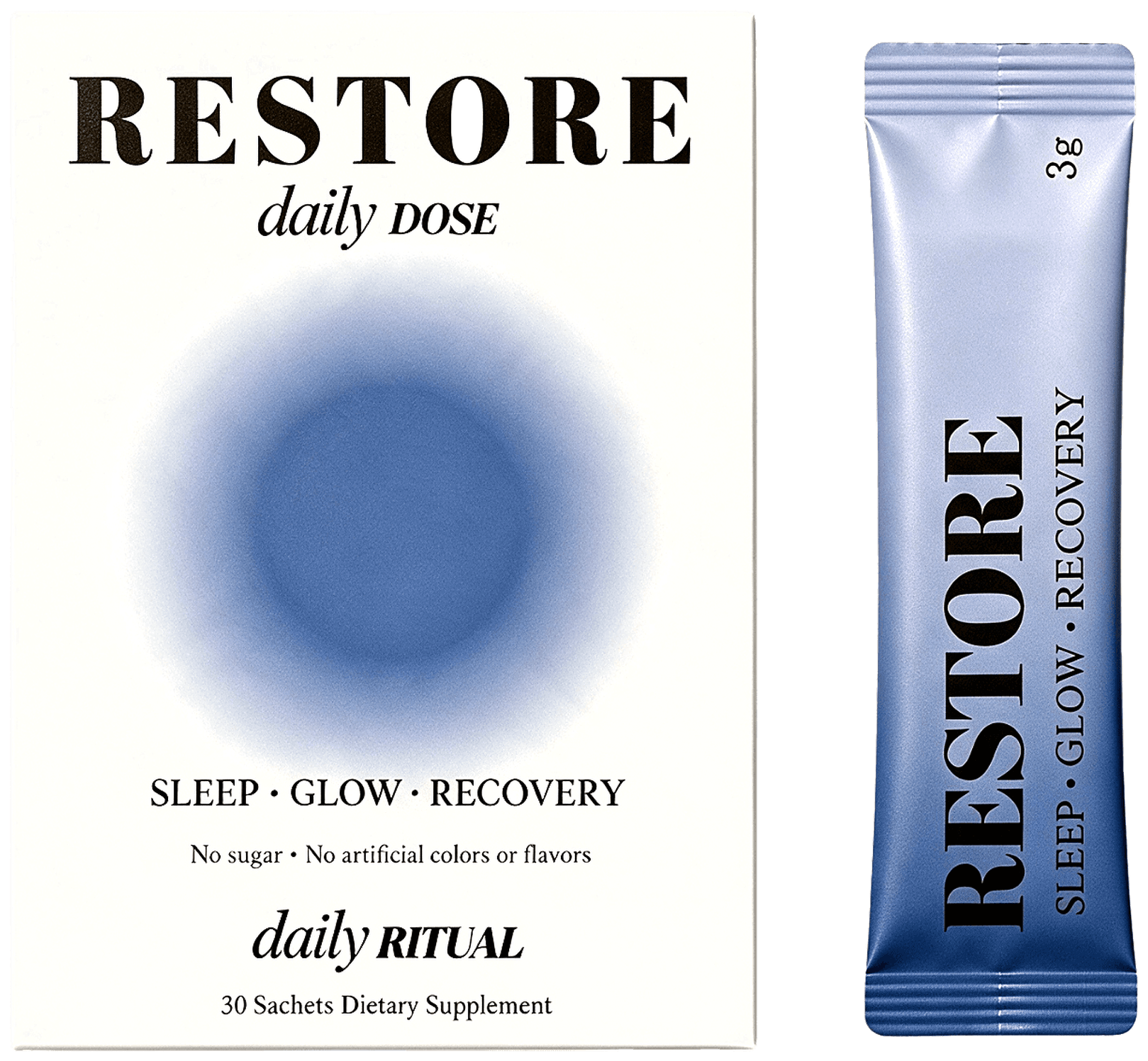
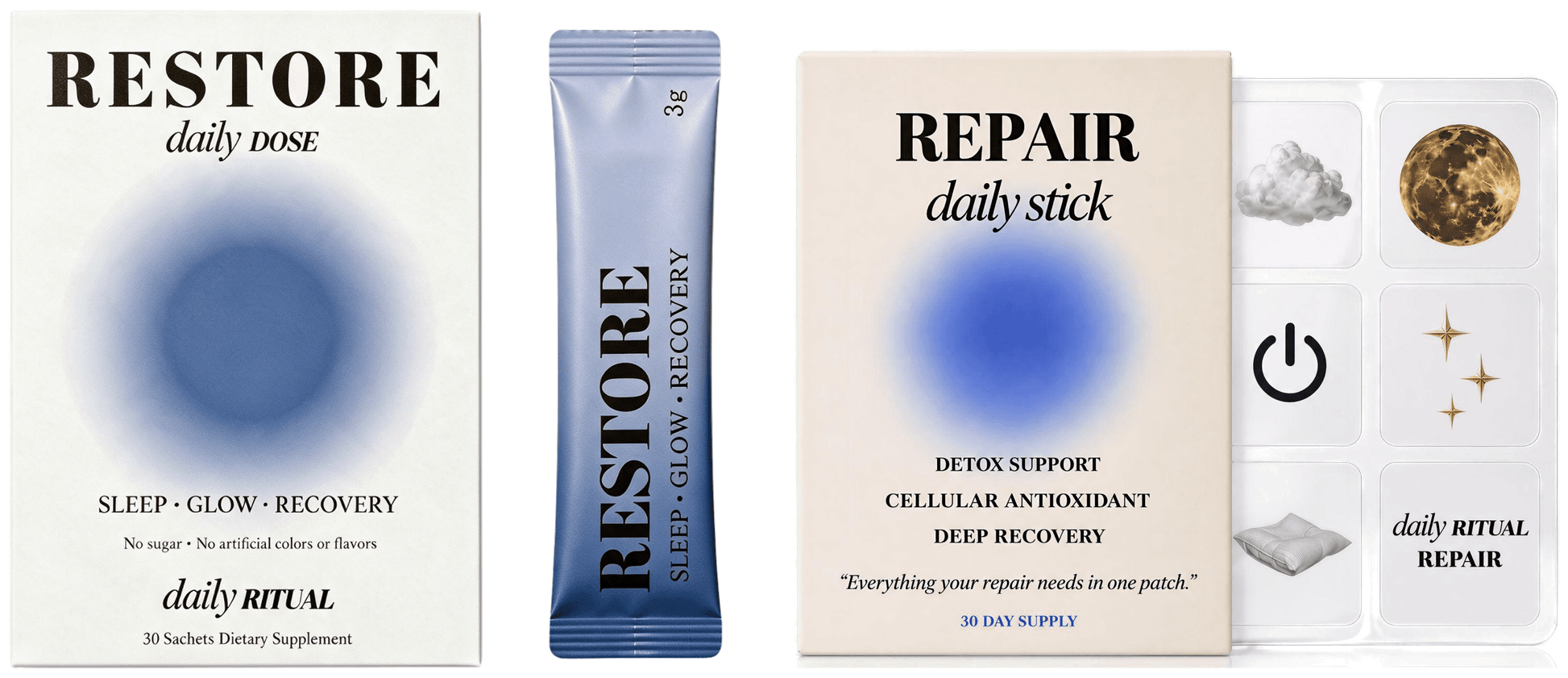
This is where many people add RESTORE, our evening drink mix. It combines magnesium glycinate, fish collagen, chamomile and grapefruit, and it's made without melatonin. Magnesium helps support muscle relaxation and normal nervous system function, and chamomile has long been used as part of evening routines.
Pair your drink with something slow: light stretching, a few pages of a paper book, or quiet conversation.
10 minutes before bed: Breathe and settle
Once you're in bed, try a few minutes of slow breathing. A simple pattern is to breathe in through your nose for a count of four and out for a count of six. Longer exhales tend to feel naturally calming.
If thoughts keep coming, jot them on a notepad by the bed and let them wait until morning.
What About Melatonin?
Many adults reach for melatonin without thinking much about the routine around it. But a steady wind-down, consistent timing and a dark, cool room are the foundation either way. That's why we built RESTORE without melatonin: it's designed to fit into a nightly ritual you can repeat, not replace one.
If you have questions about melatonin or any supplement, especially if you take medications, talk with your healthcare provider.
Your Day Shapes Your Night
A bedtime routine works best when the rest of the day supports it. A few daytime habits make evenings easier:
- Keep a steady wake time. Getting up at roughly the same time each day helps anchor your rhythm, even on weekends.
- Get daylight early. Morning light outdoors is a gentle way to set your internal clock.
- Watch late caffeine. Caffeine can linger for hours, so many people find a mid-afternoon cutoff helpful.
- Eat dinner a little earlier. A lighter, earlier meal can leave you feeling more comfortable at bedtime.
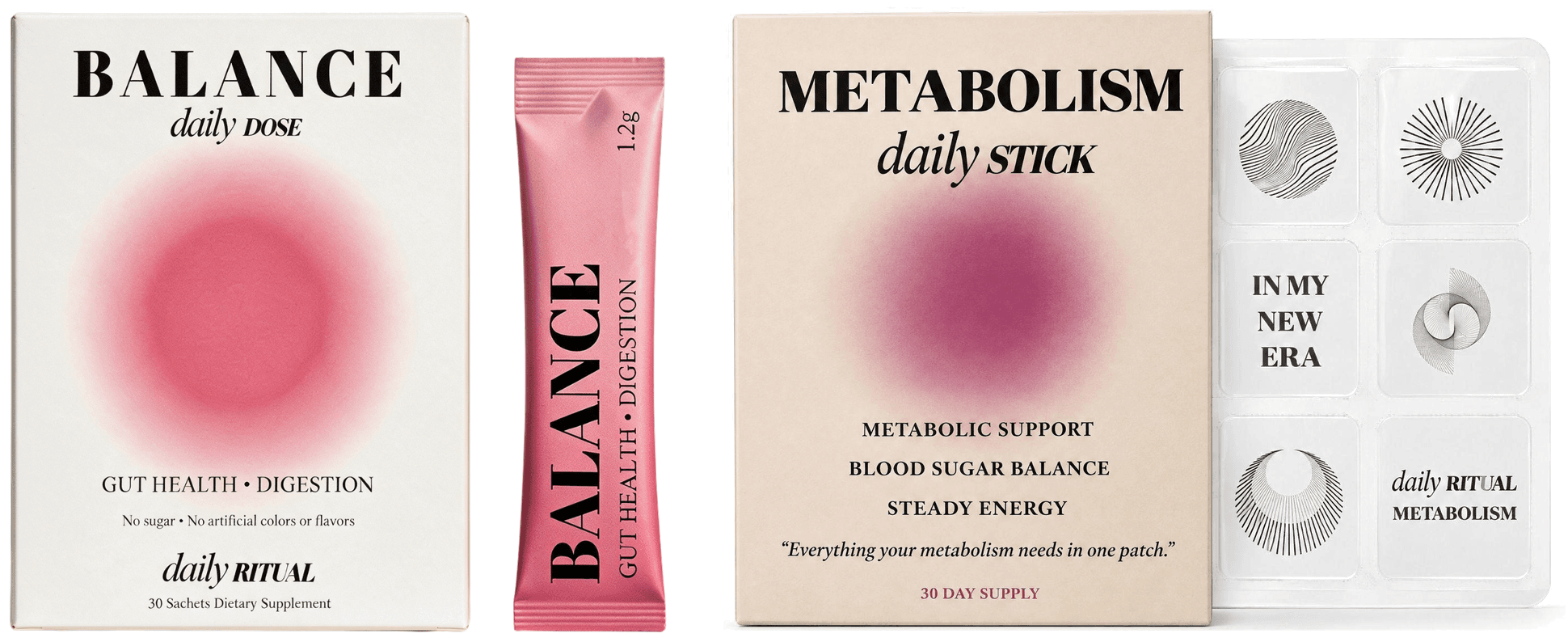
If you like having a structure for the whole day, The Full Dose Trio lets you pair RESTORE with RISE for mornings and BALANCE for midday, so your evening ritual sits inside a fuller daily rhythm.
Set Up Your Bedroom for Rest
Your environment does a lot of the work for you. Small changes can make a real difference:
- Cool: Most people rest more comfortably in a slightly cool room.
- Dark: Blackout curtains or an eye mask help block streetlights and early sunrise.
- Quiet: A fan or white noise can soften sudden sounds.
- For sleep only: Try to keep laptops and work out of bed so the space stays linked with rest.
How to Make the Routine Stick
The best bedtime routine is the one you'll repeat. A few tips:
- Start small. Pick one step, like the warm drink or dimming the lights, and do it nightly for a week before adding another.
- Use an anchor. Attach your routine to something you already do, such as brushing your teeth.
- Set a wind-down alarm. An alarm 60 minutes before bed is often more useful than one in the morning.
- Be flexible. On late nights, do a shortened version. Ten minutes of your routine still counts.
If you'd rather not run out of your evening drink, Subscribe & Save gives you 12% off every 4 weeks, and subscriptions come with a 30-day money-back guarantee.
FAQ
How long should a bedtime routine for adults be?
Around 30 to 60 minutes works well for most people. If that feels like too much, start with 10 to 15 minutes and build from there.
What should I drink before bed?
Choose something warm and caffeine-free, such as herbal tea or an evening drink mix like RESTORE, which has magnesium glycinate and chamomile and no melatonin. Keep the amount moderate so you're not up during the night.
Is it okay to use my phone during my wind-down?
It's best to put it away, but if you use it, turn on night mode, lower the brightness and stick to calm content. Charging it outside the bedroom is an easy way to make this automatic.
How soon will a new routine feel natural?
It varies, but most people find a routine starts to feel automatic after a few weeks of doing it most nights. Consistency matters more than getting every step right.
These statements have not been evaluated by the Food and Drug Administration. This product is not intended to diagnose, treat, cure, or prevent any disease.